Abstract
This introductory research thesis is the culmination of 9 months of research and writing, completed during my Master 2 year at the École Nationale Supérieure d'Architecture de Lyon, within the “History, Theory, and Creation” study domain — focusing on the city of Philadelphia.
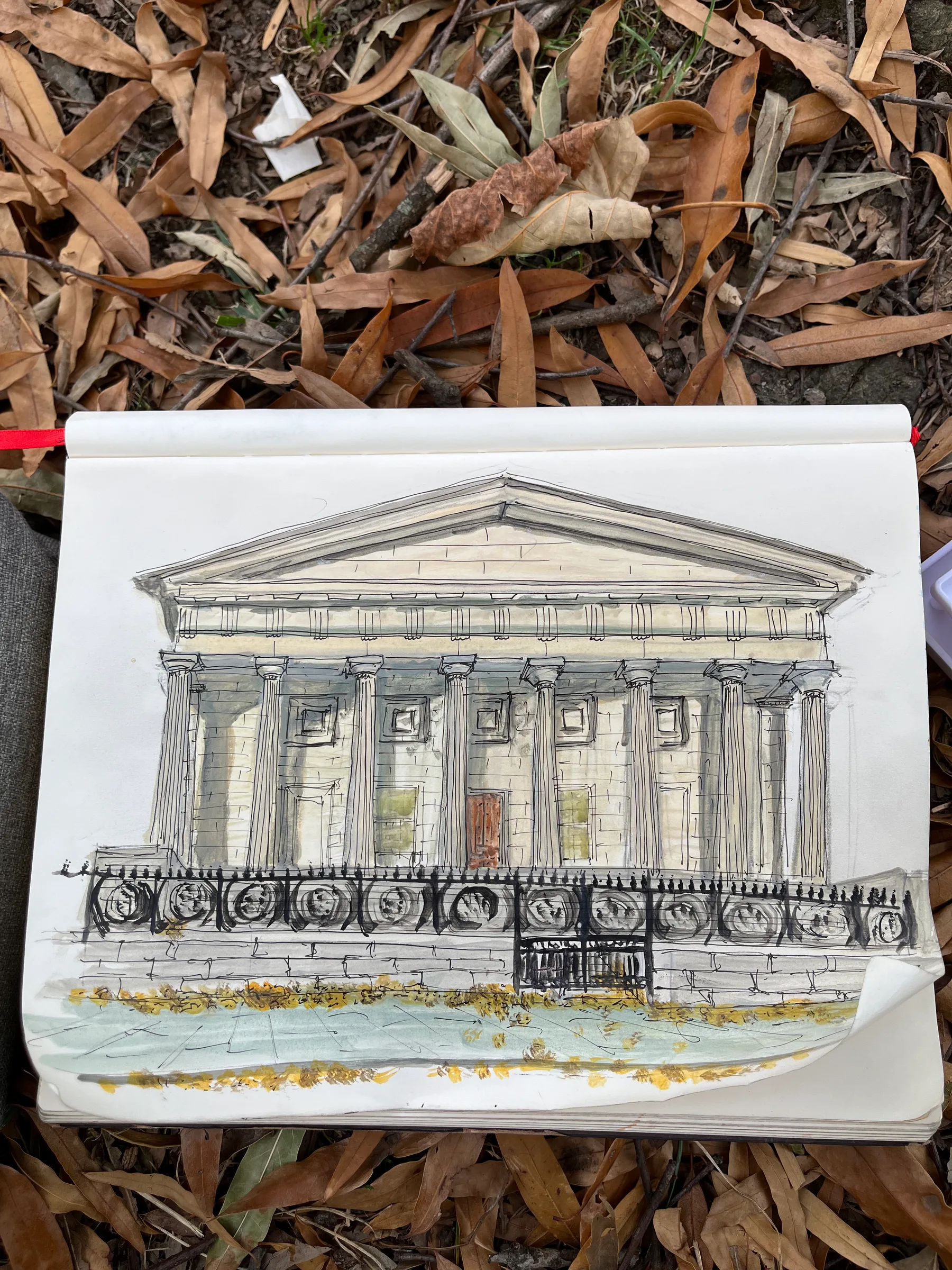
How did a young nation, newly freed from colonial rule, forge its identity amidst the vestiges of an ancient civilization? The answers lie in Philadelphia, the cradle and epicenter of the Greek Revival. Emerging from a European synthesis of Classicism and Romanticism, the movement reached America, where it was enriched by unprecedented formal innovations. From bank temples to civic institutions, this architectural language became the mirror of post-revolutionary American society's ambitions. Yet, this style experienced a decline as rapid as its ascent—bearing witness to a major civilizational shift: humanity's entry into modernity.
Blending architectural analysis, archival research, and philosophical reflection, this thesis questions the very ontology of the act of building. By studying a foundational moment of American identity, we glimpse the deep dynamics that currently fuel the controversial resurgence of classical forms in architecture. This return of Classicism as an active reality raises questions about the underlying political and symbolic motivations. As a mirror of American society, the study of the Greek Revival informs us about the ideological trajectories and formal continuities that have shaped the history of the United States for two centuries. Ultimately, to understand the present and anticipate the future, one cannot bypass an in-depth study of the past.
To understand the present, and anticipate the future, one cannot bypass an in-depth study of the past.